
TPO Roofing Houston: A Practical Roofing Solution for Commercial Properties
A commercial roof has to do much more than cover the top of a building. It protects inventory, equipment, employees, customers, interior finishes, and the business itself from changing weather conditions. In Houston, where commercial buildings can experience intense sunlight, high temperatures, humidity, heavy rainfall, and strong seasonal weather, choosing an appropriate roofing system deserves careful consideration.
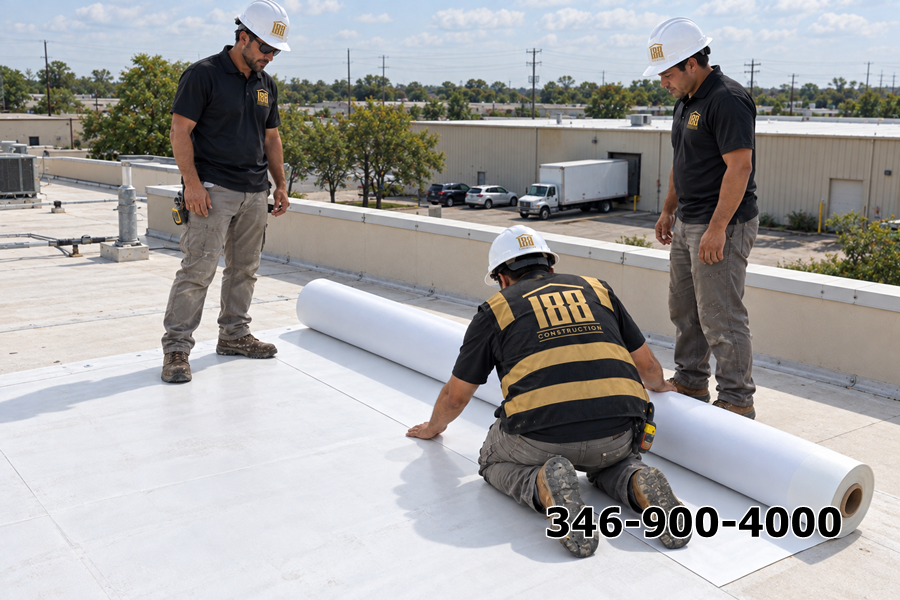
TPO Roofing Houston has become an important option for property owners looking for a single-ply roofing membrane for commercial and low-slope buildings. TPO, or thermoplastic polyolefin, is designed to provide a continuous protective layer across the roof surface when properly installed.
188 CONSTRUCTION provides TPO roofing solutions for commercial properties in Houston, including new roof installation, replacement, remodeling-related roofing work, and roofing improvements.
Mr. Nguyen: 346-900-4000
What Is a TPO Roof?
TPO stands for thermoplastic polyolefin. It is a single-ply roofing membrane commonly used on commercial buildings with low-slope or relatively flat roof designs.
Unlike traditional roofing systems that may use multiple layers of materials, a TPO roof uses a membrane system installed across the roof assembly. The membrane can be mechanically attached or installed using other appropriate methods depending on the project design and existing roof conditions.
One of the characteristics that makes TPO attractive for commercial properties is its light-colored surface, which is commonly designed to reflect a portion of solar energy. This can be particularly relevant for buildings exposed to Houston’s strong sun and extended periods of high temperatures.
Why Consider TPO Roofing in Houston?
Houston’s weather creates several challenges for commercial roofing.
During the warmer months, roof surfaces can be exposed to significant heat and sunlight. At other times of the year, heavy rain can place substantial demands on drainage systems and roof detailing.
A roofing system therefore needs to be selected with the building’s design and local environmental conditions in mind.
TPO can be considered for properties where a single-ply membrane system is appropriate. Its continuous surface and heat-welded seams can provide a uniform roofing layer when the installation is properly executed.
For a commercial property owner, the suitability of TPO depends on factors such as roof design, insulation, drainage, existing substrate, building use, and the condition of the current roof.
Mr. Nguyen: 346-900-4000
TPO Roofing for Commercial Buildings
TPO is commonly associated with commercial and industrial roofing applications.
Office buildings, retail properties, warehouses, restaurants, and other low-slope commercial structures may have roof designs that are compatible with single-ply membrane systems.
The right roofing approach can vary from one building to another. A new construction project may require a completely new roof assembly, while an older commercial property may need removal and replacement of an existing roofing system.
Before starting the project, the existing roof should be considered as a whole rather than focusing only on visible surface damage.
TPO Roof Replacement
Roof replacement is often a significant investment for a commercial property owner. When an existing roof has reached the end of its service life or has developed extensive problems, replacing it can involve much more than installing a new membrane.
The condition of the deck, insulation, drainage, flashing, penetrations, curbs, and other roof components can influence the project.
TPO replacement provides an opportunity to evaluate these elements and create a roofing assembly appropriate for the property’s current needs.
188 CONSTRUCTION can incorporate TPO roofing into broader commercial renovation and construction projects, allowing roofing requirements to be considered alongside other improvements.
Mr. Nguyen: 346-900-4000
TPO Roofing for New Construction
New commercial construction offers greater flexibility when planning a roofing system.
The roof design can be coordinated with structural elements, insulation, drainage, HVAC equipment, electrical components, skylights, roof penetrations, and other building requirements.
This coordination matters because commercial roofs often contain equipment and penetrations that need proper detailing. HVAC units, vents, pipes, and other components can create potential points where water management must be carefully addressed.
Planning TPO roofing during the early stages of construction allows the roof system to be considered as part of the complete building rather than as an isolated finishing step.
TPO Roofing and Houston’s Rainy Weather
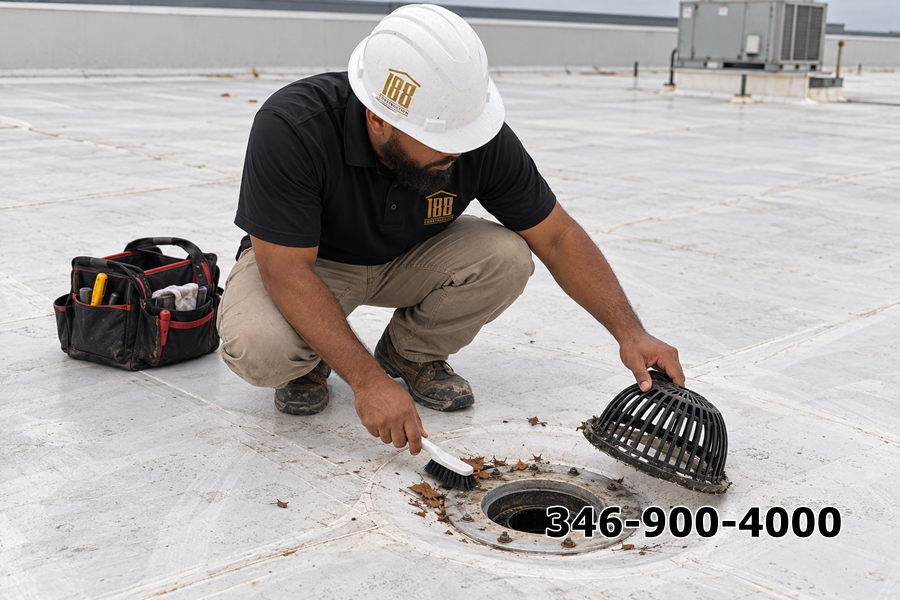
Rainwater management is an important consideration for any commercial roof.
A membrane alone does not determine whether a roof drains effectively. Roof slope, drainage locations, scuppers, gutters, penetrations, flashing, and other details all contribute to how water is directed away from the building.
For Houston commercial properties, these considerations are particularly relevant because heavy rainfall can occur during certain weather events.
When installing or replacing a TPO roof, the overall drainage strategy should be considered together with the membrane system.
TPO Roof Installation and Proper Detailing
The performance of a roofing membrane depends significantly on how the complete roofing system is installed.
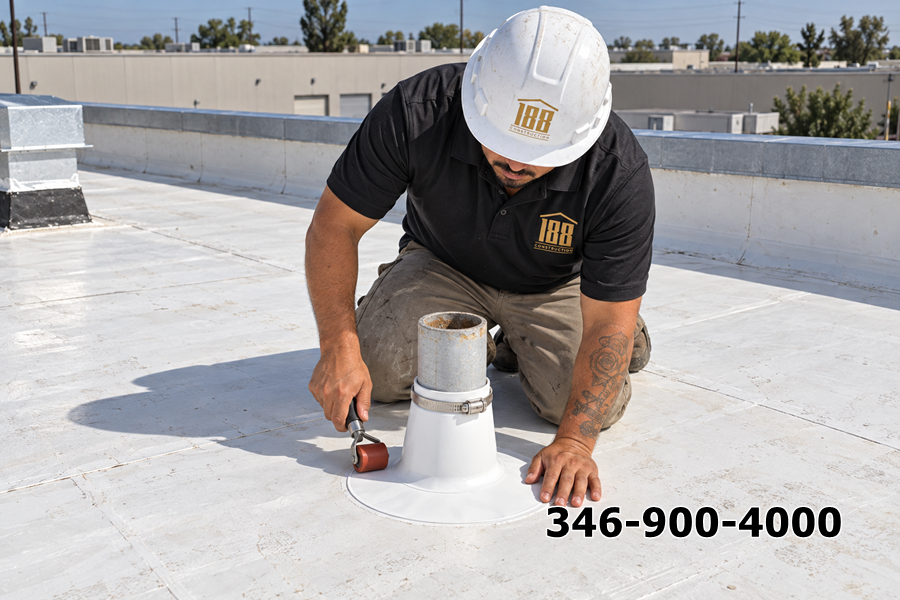
Seams, edges, penetrations, corners, flashing, transitions, and connections require appropriate attention. Even a high-quality roofing material cannot compensate for poor detailing or unsuitable installation practices.
For this reason, commercial property owners should look beyond the membrane itself when evaluating a roofing project.
At 188 CONSTRUCTION, TPO roofing is approached as part of the complete roof assembly, with attention to the property’s design and the requirements of the construction project.
Mr. Nguyen: 346-900-4000
TPO Roofing During Commercial Remodeling
Commercial remodeling can create new requirements for an existing roof.
For example, a renovation may involve relocating HVAC equipment, modifying interior spaces, adding penetrations, changing building systems, or expanding part of the property. These changes can affect the roof and its existing waterproofing details.
Addressing roofing requirements during the remodeling stage can help coordinate roof work with other construction activities.
If you are researching broader roofing options for your property, you can also visit our Commercial Roofing page for additional information.
Professional Construction Experience
Commercial roofing projects frequently intersect with other parts of a building project. Structural considerations, mechanical equipment, drainage, insulation, and architectural requirements may all influence the final roofing system.
188 CONSTRUCTION has a Master’s-degree engineer on its team and is Licensed and Insured, providing commercial clients with professional construction support when roofing is part of a larger project.
Our goal is to develop roofing work around the actual property rather than treating every commercial roof as identical.
Mr. Nguyen: 346-900-4000
Is TPO Roofing Right for Your Houston Property?
TPO can be an option for many commercial low-slope roofing applications, but the appropriate system depends on the building.
The roof’s current condition, construction type, slope, drainage, insulation, equipment placement, and intended use should all be considered before selecting a roofing approach.
For a property owner, the most useful first step is often a project-specific evaluation rather than choosing a material based solely on general specifications.
Planning a New Roof in Houston?
If your commercial building needs a roof replacement, new TPO membrane, or roofing work as part of a construction project, 188 CONSTRUCTION can help you discuss the property’s requirements.
Mr. Nguyễn – 346 900 4000
When you call, you can share information about the type of building, the approximate roof area, the age of the existing roof, and whether the project involves replacement, renovation, or new construction. This gives the team a clearer starting point for discussing your roofing needs.