

Walk barefoot across a tile floor on a July afternoon in Houston and you’ll understand why so many local homes use it. It stays cool, shrugs off spills and handles the humidity that makes other flooring swell, warp or stain.
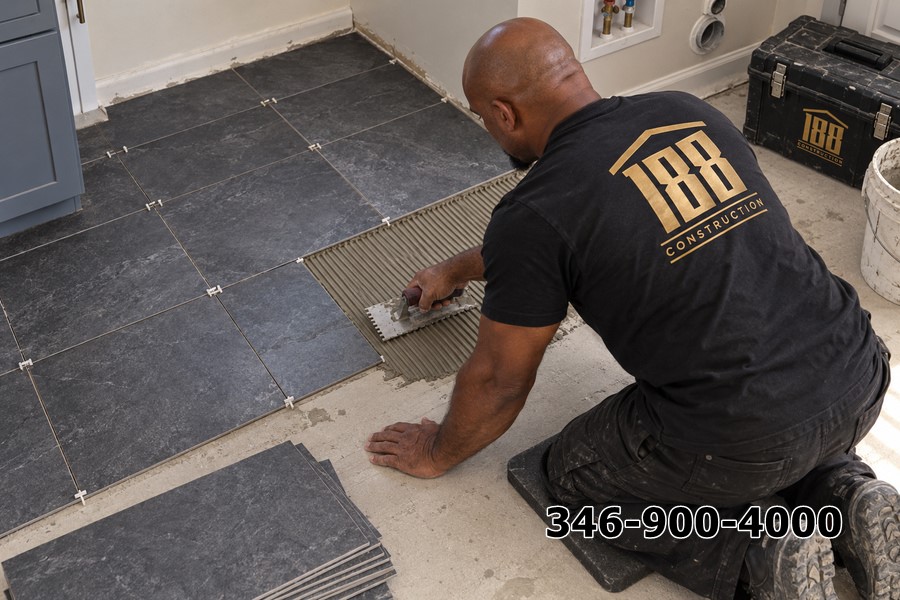
But tile is also unforgiving. It is rigid, so it only performs well when the surface underneath is sound and the installation is done with care. This guide walks through what makes tile flooring installation in Houston different, which tile fits which room and where the real quality of a floor is decided.
Mr. Nguyen: 346-900-4000
Start With the Foundation: What Houston Slabs Mean for Tile
Most Houston homes sit on concrete slabs, and much of the region is built on clay soil that swells when wet and shrinks when dry. That seasonal movement can be subtle, but tile notices it. A rigid floor laid over a slab that flexes or has small cracks may develop cracked tiles or hairline grout lines later.
Good installers plan for this from day one. That can mean checking the slab for existing cracks, using a crack-isolation membrane over them and leaving proper movement joints where the tile meets walls and across large areas. Moisture matters too. A slab that holds excess moisture can undermine adhesives and cause problems that show up months after the work is finished.
Room-by-Room: Which Tile Goes Where
One tile does not suit every space. Here is how we usually think about it:
Kitchens. Choose a durable, easy-to-clean tile with a finish that hides crumbs and daily wear. Porcelain is popular because it is dense and resists staining and moisture. A slightly textured surface is more forgiving when something spills.
Bathrooms and laundry rooms. Water is constant here, so slip resistance matters. Look for a tile with a suitable wet-floor traction rating (often shown as a DCOF value) and consider smaller tiles or more grout lines on shower floors, which grip better underfoot.
Entryways and mudrooms. These floors face dirt, rain and heavy foot traffic. Hard-wearing porcelain in a mid-tone color will look clean longer than very light or very dark options.
Living areas and bedrooms. Here you can lean toward style: large-format tile for a seamless look, wood-look tile for warmth without the maintenance, or natural stone for character. Large tiles require an especially flat surface, which we’ll cover below.
Covered patios and outdoor rooms. Choose tile rated for exterior use with good traction and resistance to temperature swings. Interior-only tile can become slick or deteriorate outdoors.
Mr. Nguyen: 346-900-4000
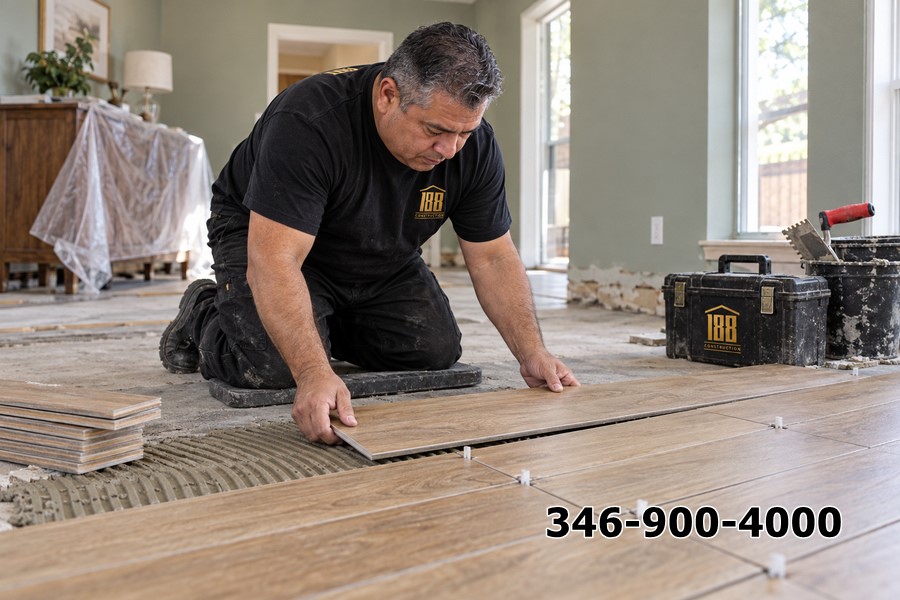
Preparation Is Where Great Floors Are Made
Ask a tile setter what separates a floor that lasts from one that fails, and the answer is rarely the tile itself. It’s the work you can’t see once the job is done.
Flatness. The surface needs to be level within tight tolerances. Large tiles in particular show every dip as an uneven edge or “lippage.” Grinding high spots and filling low ones takes time but makes a visible difference.
Cleanliness and bonding. Old adhesive, sealers or dust get in the way of a strong bond. Proper cleaning and priming set the stage for the mortar.
Full mortar coverage. Tile should be set in an even bed of the right thinset with consistent coverage. Hollow spots under tile are a common cause of cracks and loose pieces down the road.
This is where engineering discipline pays off. 188 CONSTRUCTION includes engineers with Master’s degrees, and as a licensed and insured company we approach a floor as a system: slab condition, moisture, flatness, bonding and movement are all evaluated before the first tile goes down.
Layout, Grout and Finishing Touches
Once the surface is ready, details decide how the floor looks.
- Layout planning. A good installer dry-lays the pattern and centers it so you don’t end up with thin slivers of tile along the most visible walls.
- Grout choice. Color changes the whole feel of the floor. Neutral grout blends in, while contrasting grout highlights the pattern. Epoxy grout resists stains better but is more demanding to install.
- Sealing. Natural stone and some grouts should be sealed to guard against moisture and stains.
- Transitions. Thresholds between tile and other flooring should be planned for smooth, safe edges.
- Spare tiles. Keep a few leftover pieces from the same batch. Matching a color later can be difficult.
Mr. Nguyen: 346-900-4000

Keeping Tile Floors Looking New
Tile is low-maintenance, and a few habits protect it further:
- Sweep or vacuum regularly, since grit is the main enemy of glazed surfaces.
- Mop with a pH-neutral cleaner and avoid harsh acids or bleach on grout and stone.
- Wipe up spills promptly on unsealed grout and natural stone.
- Use felt pads under furniture and mats at entries.
- Re-seal grout and stone periodically, according to the product’s guidance.
Before You Hire: A Short Checklist
Whoever installs your tile, make sure you get clear answers on these points:
- How will they evaluate the slab and handle cracks or movement?
- What is the plan for leveling and surface prep?
- Will you receive a written scope, timeline and material details?
- Is the contractor licensed and insured?
- What is the warranty on workmanship?
If you’re also weighing hardwood, vinyl or other surfaces for different parts of the house, our Flooring Services page shows the full range of what we install and repair.
A Floor You’ll Enjoy for Years
A beautiful tile floor should feel solid underfoot, look good day after day and stay trouble-free long after the project is finished. 188 CONSTRUCTION would love to look at your space, talk through the right tile and prep for your home and give you a clear plan with no surprises. Reach out to Mr. Nguyễn at 346 900 4000 and let’s make your floors something you’re proud of.