A floor rarely fails overnight. It starts as a faint squeak by the hallway, a corner that feels slightly soft or a tile that sounds hollow when you tap it. Ignore those signs for a few seasons and a small fix can grow into a major one.
In Houston, where humidity, storms and shifting soil all test a home’s floors, early attention pays off. This guide explains what drives floor damage here, how repairs differ by flooring type and how to tell when a repair is enough.
Start With the Cause, Not Just the Damage
A repair that treats only what you can see is often temporary. Houston homes face a handful of recurring culprits:
- Humidity swings that make wood and wood-based products expand and contract.
- Plumbing and appliance leaks from dishwashers, water heaters, supply lines and refrigerators.
- Storm and flood water that seeps into subfloors and baseboards.
- Slab movement from expansive clay soil, which can crack tile and open gaps in other floors.
- Everyday wear from traffic, pets, furniture and grit.
Good repair work identifies which of these is behind the problem. Otherwise the same damage tends to return.
Repairs by Floor Type
Hardwood. Squeaks usually come from boards moving against nails or the subfloor, and can often be reduced by securing them properly. Light scratches may be handled by screening and recoating the surface, while deep gouges or stained boards may need individual replacement. If boards are cupping, meaning the edges rise higher than the center, moisture is the likely culprit. The source must be corrected and the wood allowed to stabilize before sanding or replacing anything.
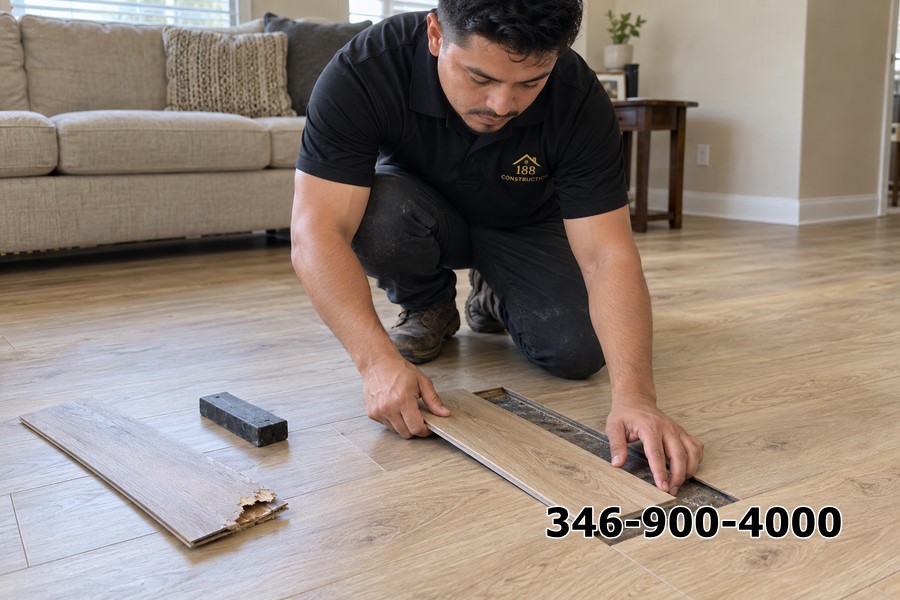
Laminate. Swollen edges and raised seams usually mean water got into the core, and that kind of damage generally doesn’t dry back to normal. The solution is typically replacing affected planks. Because laminate floats and clicks together, reaching a damaged plank may mean carefully lifting several rows back to it.
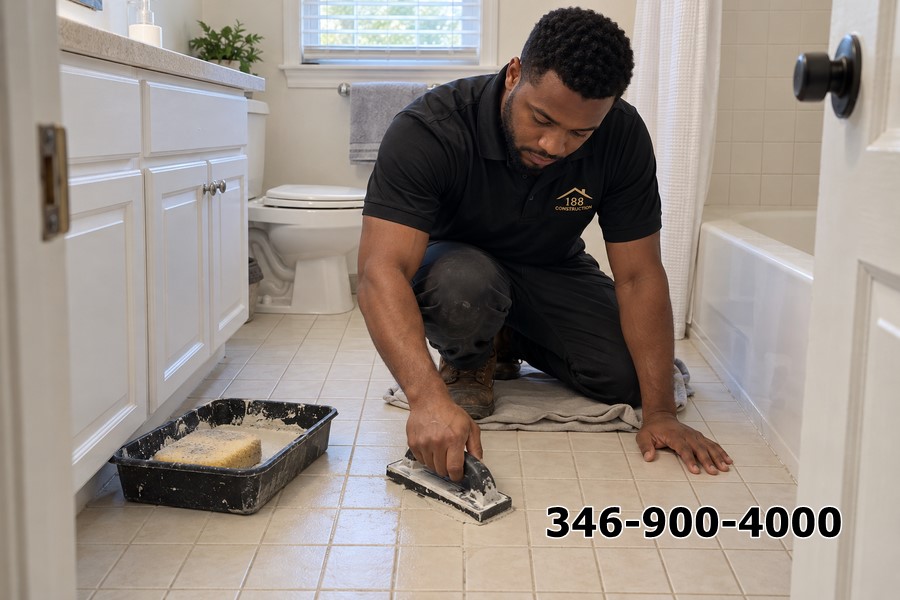
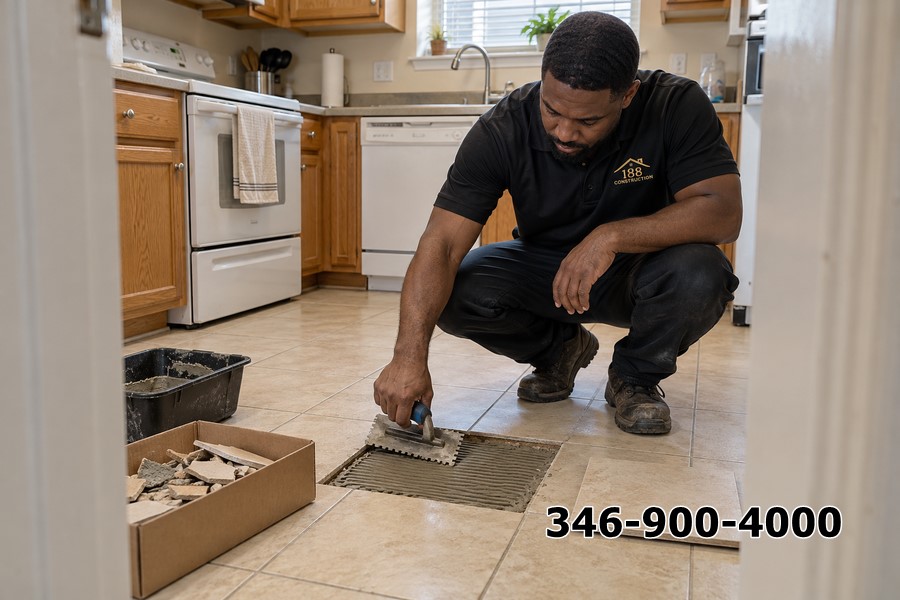
Tile. Cracked tiles can be removed and replaced, but matching an older tile takes planning, which is why keeping spare tiles from the original job is so valuable. Tiles that sound hollow when tapped may have lost their bond, and failing grout can be cleaned out and replaced. Repeated cracks in the same area can point to slab movement, so the cause deserves a look.
Luxury vinyl plank. Peeling edges, gaps and lifted planks often trace back to moisture, an uneven subfloor or heat exposure. Damaged planks can often be replaced individually, as long as matching material is available.
Mr. Nguyen: 346-900-4000
When the Problem Is Underneath
Sometimes the surface is only the messenger. Soft spots, persistent odors, floors that bounce and boards that keep warping can indicate subfloor damage, hidden moisture or structural trouble.
If a subfloor is rotted or water-stained, patching the top layer only hides the issue. The right repair removes the affected section, addresses the moisture source and rebuilds the base before new flooring goes back on. Skipping that step is how repaired floors fail again within a year.
Repair or Replace? A Practical Way to Decide
Replacement isn’t always necessary, and repair isn’t always smart. Consider these factors:
- Extent of damage. A few damaged boards or tiles favor repair. Widespread damage across several rooms often favors replacement.
- Age and condition. A floor that is otherwise in good shape is usually worth repairing. A worn-out floor with recurring problems may not be.
- Availability of matching material. If the product is discontinued, a repair may stand out.
- Underlying cause. If moisture or movement can’t be controlled, new flooring will suffer the same fate.
- Your plans. If you’re about to remodel or sell, a full refresh may make more sense than patching.
If replacement is the better path, our Flooring Services page shows the surfaces we install and repair, so you can compare options with confidence.
Mr. Nguyen: 346-900-4000
What a Repair Visit Includes
A good repair visit is more investigation than guesswork. We start by listening to when the problem began and what changed, then inspect the surface, check moisture levels where appropriate and examine the subfloor and surrounding areas. 188 CONSTRUCTION includes engineers with Master’s degrees, and as a licensed and insured company we explain what we find in plain language so you understand both the fix and the reason behind it.
After that, you receive a clear scope: what will be repaired, what materials are needed, how long it should take and what the options are. We protect surrounding areas, make the repair and leave the space clean.
Small Habits That Prevent Big Repairs
- Fix leaks promptly and check appliance hoses periodically.
- Wipe up spills quickly, especially on wood, laminate and vinyl.
- Use felt pads on furniture and mats at entrances.
- Keep indoor humidity stable by running your AC regularly.
- Keep leftover flooring from your original installation.
- After storms or flooding, inspect floors early for lifting, odors or soft spots.
Give Your Floors a Second Chance
Whether your floor has a stubborn squeak or serious water damage, the best repair is the one that solves the cause and not only the symptom. 188 CONSTRUCTION would be glad to take a look, tell you honestly what’s needed and restore your floors so they feel solid again. Get in touch with Mr. Nguyễn at 346 900 4000 and describe what you’re seeing, and we’ll help you figure out the next step.