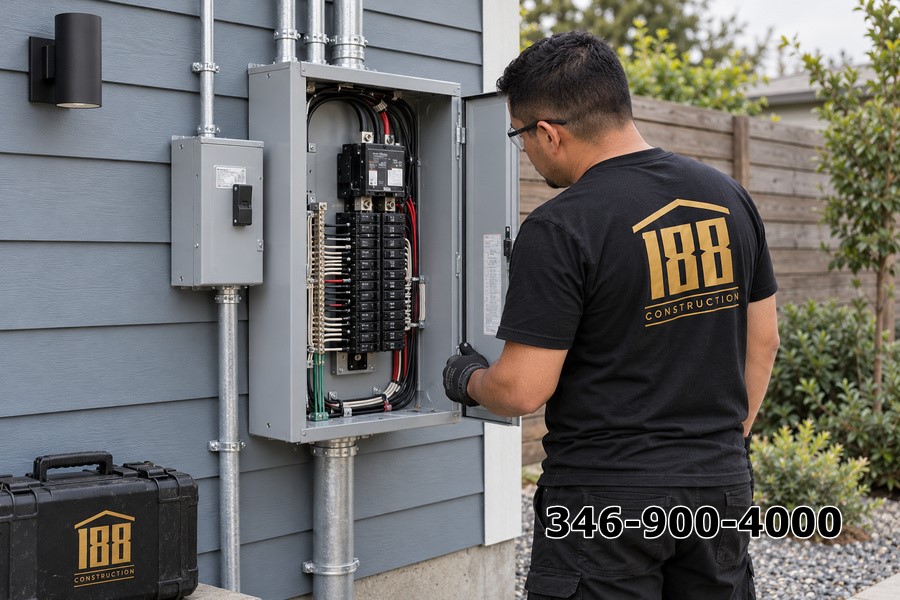
Your electrical panel is the control center of your home. Every circuit, from the air conditioner to the kitchen outlets, runs through it. In many Houston houses, that panel was installed decades ago for a far smaller electrical load than families use today. If you’re considering an electrical panel upgrade in Houston, this is what to know about when it’s needed, what size to choose and what the work involves.

Mr. Nguyen: 346-900-4000
Why Panels Fall Behind
A home built in the 1970s or 1980s was designed around fewer devices: one TV, a few lamps, a modest AC unit. Today, a typical household runs central air conditioning through long Texas summers, an electric range or dryer, home offices, multiple screens and, increasingly, an electric vehicle charger. A panel sized for the past can struggle to keep up, and the strain shows up as trouble.
Age matters too. Some older panels, including certain Federal Pacific and Zinsco models, have well-documented concerns about breakers that fail to trip when they should. If your home has one of these, an inspection is worth scheduling even if nothing seems wrong.
Warning Signs Your Panel Needs Attention
Contact an electrician if you notice:
- Breakers that trip repeatedly
- Lights that flicker or dim when appliances turn on
- A burning smell near the panel, or scorch marks on it
- Buzzing or crackling sounds from the box
- A panel that feels warm to the touch
- Rust or moisture inside the cabinet
- A panel with no open slots, or heavy reliance on power strips and extension cords
- A fuse box instead of breakers
Any burning odor, sparking or heat from the panel is urgent. Turn off what you can safely and call a professional right away.
Mr. Nguyen: 346-900-4000
Choosing the Right Amperage
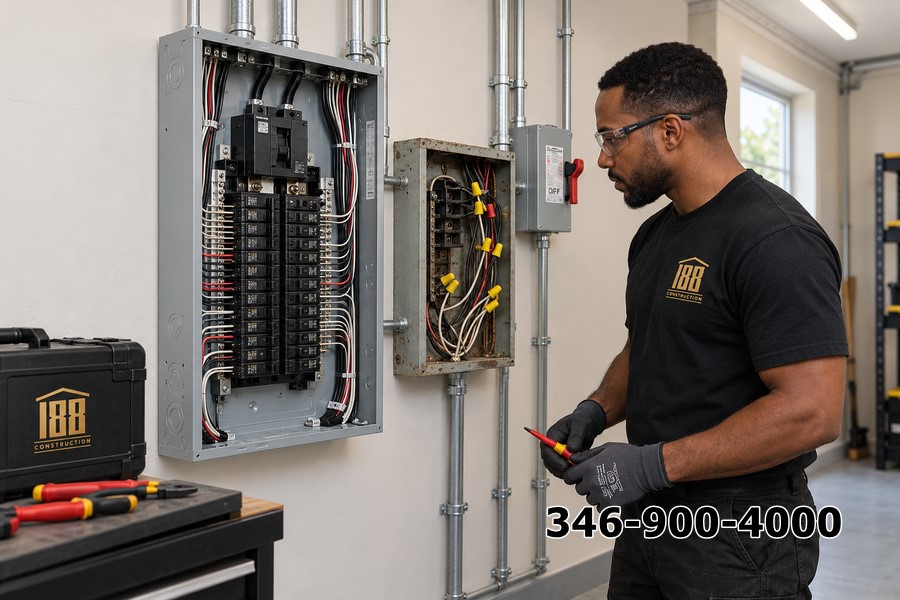
Amperage is the total capacity your panel can deliver. As a general guide:
- 100 amps was common in older homes and can be enough for small, simple households.
- 150 amps gives breathing room for mid-sized homes with moderate loads.
- 200 amps is the usual choice for modern homes, especially those with central AC, electric appliances or plans for an EV charger.
The right number depends on your actual load, not a rule of thumb. Houston homes often run heavy cooling loads for much of the year, and a whole-home generator or surge protection, both popular here because of storm season, adds further considerations.
What an Upgrade Actually Involves
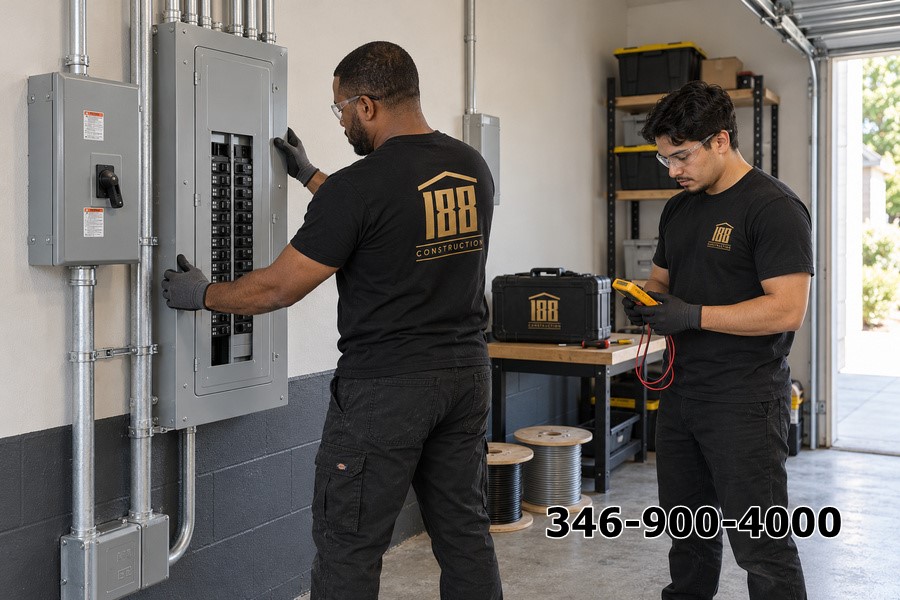
A panel upgrade is more than swapping a box. The work usually includes:
Load calculation. Before anything is replaced, the electrical demand of the home is calculated, including appliances, HVAC and planned additions. This calculation determines the panel size and the wire and breaker ratings that go with it. Because it drives every other decision, it is the step where engineering judgment matters most. At 188 CONSTRUCTION, our engineers hold Master’s degrees, and we are licensed and insured, so the sizing and safety of the system are worked out properly before any wiring is touched.
Panel and breaker replacement. The old panel is removed and a new one installed with breakers matched to each circuit. Where necessary, the service entrance, meter base or grounding is updated to meet current requirements.
Utility coordination. Power to the home has to be shut off at the source during the swap. In Houston, that generally means coordinating with the electric utility for disconnection and reconnection.
Permit and inspection. Panel replacement typically requires an electrical permit and an inspection, so the finished work is checked against code.
Labeling and testing. Every circuit is labeled clearly and tested, so you know what controls what.
Many homeowners use an upgrade as the moment to add what the old panel couldn’t handle, such as dedicated circuits for an EV charger or new appliances, additional outlets, or surge protection. If your plans go beyond the panel itself, our Electrical Services cover the wiring, circuits and fixtures that come with it.
Mr. Nguyen: 346-900-4000
How Long It Takes
A straightforward replacement is often completed within a day, though power will be off for part of it. Projects that involve service entrance changes, rewiring or new circuits take longer. Planning around your household schedule, for example working from home or needing refrigeration, makes the outage easier to manage.
What Affects the Cost
Several variables shape the price:
- The amperage you choose
- The condition of the existing service entrance, meter base and grounding
- The location of the panel and how accessible it is
- Whether additional circuits or surge protection are included
- Permit and inspection fees
- Any wiring repairs discovered during the work
A written estimate based on an on-site assessment is far more reliable than a phone number, since the real cost depends on what’s behind the wall.
Why Not Delay
An aging panel rarely fails dramatically. More often it gets quietly worse: nuisance trips, warm connections, breakers that don’t protect as designed. Upgrading before that point protects your home, your appliances and the people living in it, and it lets you use new equipment without worrying about overloading the system.
Planning to add an EV charger, a new AC unit or a generator? Schedule a panel assessment first and find out what your home can safely support. Reach out to Mr. Nguyễn at 346 900 4000 to book yours.